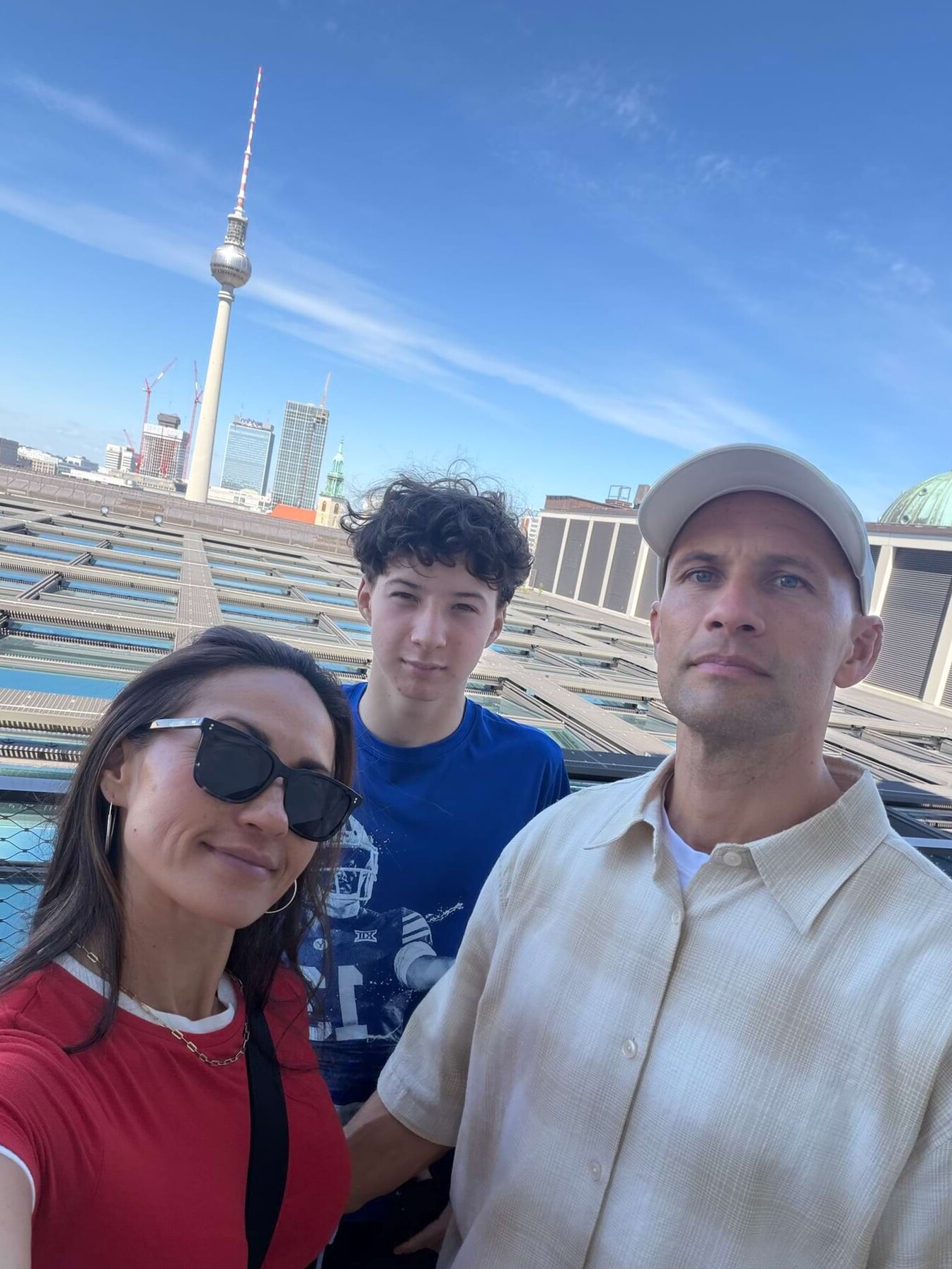

Mason Kamana Allred is an associate professor of communication, media, and culture at Brigham Young University–Hawaii. He earned his PhD in German from the University of California, Berkeley, with a designated emphasis in Film and Media Studies.
During his doctoral studies, he spent a year in Berlin as a Fulbright scholar in 2012–13 - his first time living in the city. That experience gave him a lasting connection to Berlin and was an important reason he wanted to return more than a decade later with his family.
It actually started with a project on representations of Hawaiian hula girls — there's a lot of that in American pop culture, but I wanted to look beyond the U.S., more transnationally. And honestly, it began with TikTok — I noticed so many non-Hawaiian creators doing hula, or the Lilo & Stitch hula, for views, and thought: this is cultural appropriation, and it's been happening in film for a long time. So I started looking at what Japan was doing, what France was doing, and of course Germany, since I've always been interested in German film. That's how it began — with TikTok, and then I worked backward in time.
I'm interested in that deeper history — things like Völkerschau and early ethnographic and colonial film, though much of that took place in Africa rather than the Pacific. But the films I came here to study this time are a bit removed from that — they're more entertainment, kitschy pieces, like Operetten, rather than educational. Still, I wouldn't say they're completely separate from that tradition — I think they helped set the stage for the German imagination of these regions as a kind of paradise.
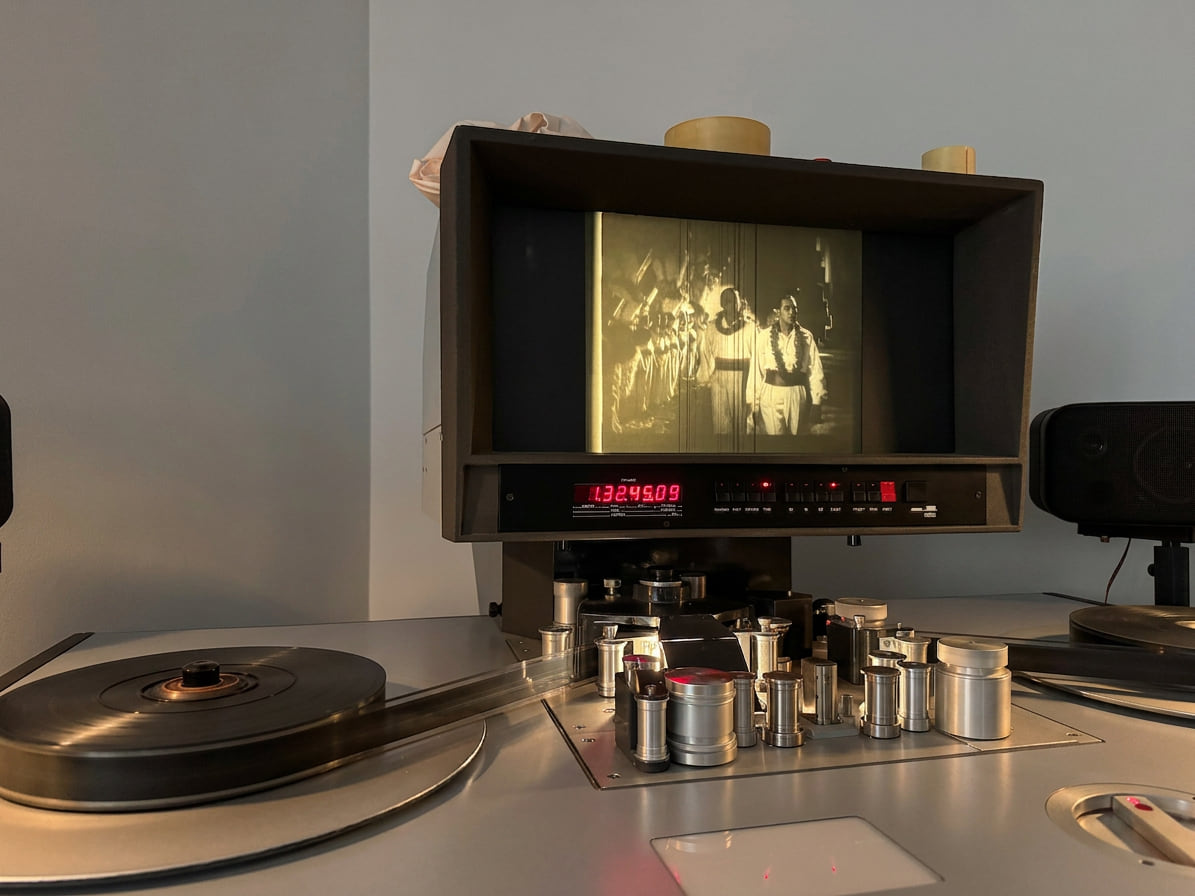
Definitely — the archive is the anchor of the whole project, it's where I find the films, periodicals, and newspapers I need. Berlin is one of the best cities for film history, especially German film history. I needed to be here for the Kinemathek and the Bundesarchiv — even compared to Wiesbaden or Munich, Berlin had the strongest holdings. I was actually at the Bundesarchiv just this morning, watching an old film on analog.
One thing I'm still astonished by is the quality of 35mm analog film — when they project it, it's remarkable how clear it still is, even at nearly 100 years old. The other was coming across a collection of private photographs Murnau (Friedrich Wilhelm Murnau) took while filming Tabu in French Polynesia for Paramount. I'd never seen this book before — it shows his fascination with capturing local Tahitians on camera, but also things like a photo of Gauguin's grave, and one of him with Matisse. It captures this recurring idea of artists visiting these islands and trying to represent their people, whether through painting or film.
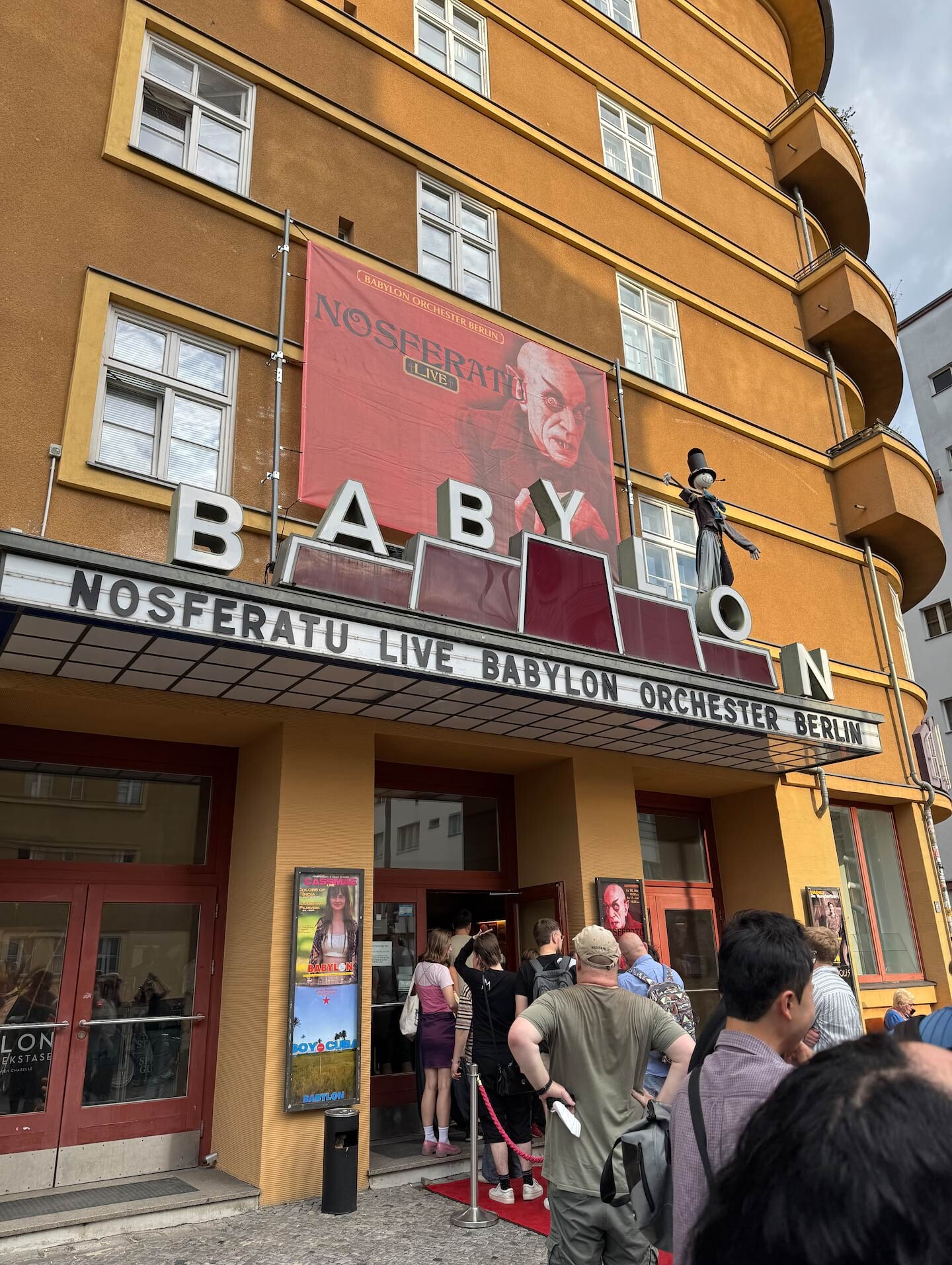
These are old films, so they sometimes include blackface and brownface - offensive by today's standards, though unfortunately normal for the era. Hawaiian culture is often treated as something to play with: European actors pretending to be Hawaiian, sometimes styled as regal and dignified, other times played for comic relief and not taken seriously. I'm critical of that.
But it also reveals a real distance from the region. Very few Germans were actually traveling there and bringing back accurate representations — it's a kind of fantasy land, not unlike Karl May's cowboys and Indians. There's no authentic connection; they're working from newspaper stories and the popularity of Hawaiian music in the '20s, not firsthand knowledge.
Overall we're getting better, because at least there's now an understanding that you should ask people from that culture for input — with Moana, for example. That awareness simply didn't exist 100 years ago, when it was completely normal to cast one culture to play another. It still happens today, just less often — expectations for authenticity are higher now.
Film and visual culture are powerful because they put our subconscious biases on display — things we've absorbed without realizing it — so we can actually analyze and talk through them. Berlin is a great city for that: multicultural, and full of opportunities to recognize our own stereotypes and get past them. Films are fake, but they're powerful — they shape our ideas and our behavior, and that's exactly why it's worth talking about them.
In American films, the woman is a metaphor for the nation, the Kingdom of Hawai'i itself — she doesn't realize it at first, but ultimately wants to be taken. And there's a gendered dimension to that too: native men are often feminized or emasculated, portrayed as unable to defend themselves, so the white man who arrives — stronger, smarter, with better technology — has to be the one to step in. There's been great scholarly work on that dynamic.
The German gaze is different, because the stakes aren't the same — Germany never stole the islands, never had control over them. In an early example, a 1933 operetta by Paul Abraham, a major plot point is the Hawaiians trying to rise up, and the Americans fearing this kind of revolt and having to suppress it. So the German perspective tends to be more playful, less political — it's almost a third-person view. There's no need to justify anything, because Germany isn't the one who took the islands. It's more about playing with the fantasy of what America did.
Exactly. There's a long history of that — Hawaiians portrayed as either the happy-go-lucky, always-cheerful people, or weak and silly, or simply beautiful women to be taken. It's deeply unfair, and it's only recently that we've started to see actual representation from Native Hawaiians themselves in film and TV. But this fits into a much longer pattern — and not just toward Hawaiians, but toward minority cultures generally.
Historically, the TV series Chief of War on Apple TV — it tells the true story of the wars that eventually unified the islands under Kamehameha. It's remarkably authentic: it's the first time a show like that has used the Hawaiian language throughout, with different accents for different islands, and accurate period clothing. It's genuinely impressive work — unfortunately it didn't get renewed for a second season, but the one season is very strong.
The first step is an article — really digging into the analysis in depth. If that goes well, I'd love to build it into a book. Documentary or exhibition, I'm not sure yet — it would depend on interest from the university or others who could help publicize it. But it's still early stages: get everything down on paper, make sense of it, get the article published, and build from there.
The only real difficulty is wanting to just go play and explore the city together — we love Berlin, we love hanging out — but then I also have to go do research, go to the archives. Since we were all here for the summer with no school or work, it was easy to just want to hang out, so I had to set aside dedicated time to actually take advantage of being here. But it was amazing having both going on at once — I'm glad I didn't come alone. I like having that balance in my life.
We love Charlottenburg — when we lived here a decade ago it was a bit further west, in Neu-Westend, but we really like this Kiez, it's chill and a bit quieter, which we appreciate with kids. Mostly we ended up going back to whatever was just across the street out of convenience — a Döner, La Maison, my kids like Smashburger — and grabbing a Club Mate wherever we go. (Got hungry? Here are some more foodspots)
Definitely — I would have missed them if I'd come alone, so being able to bring them made a huge difference. It's not that I shy away from it, it's just logistically difficult: what do you do with your place back home, how do you coordinate schedules when I teach at university and my wife teaches high school? We just had to find the right timing when we were both free, and a furnished place we could stay in for a month. That's what made it work — I'd love to come back for two or three months next time.
A normal hotel can feel cold, like you're just another guest in a big building. I wanted it to feel, especially for my kids, like we actually live here rather than just visiting for a few days — getting a daily routine going, talking to people, trying to fit in, speaking as much German as we could. It felt like our own little Wohnung rather than a hotel room, which made it easier to actually live out a routine here for a while — more like traveling than being a tourist.
One thing that stood out — where we live, on the North Shore of O'ahu, there's no major grocery store nearby, so we'd drive 30–45 minutes to Costco and stock up for the whole week. Here, it's the opposite — you just get what you need for the day. I actually love that rhythm, though it was a bit of an adjustment for my kids, always asking, "we need milk again already?"
Berlin is fascinating because there are so many different people here — I hear German spoken with so many different accents, and no one cares that mine is a bit broken either. As for the stereotypes — there's so much kindness and helpfulness. I love seeing young people give up their seat on the bus for an older person without any fuss. That said, I have noticed some older Germans get genuinely upset over small rule violations — I once crossed the street while the Ampelmann was still red with my kids, and someone reacted like I'd committed a crime. But I don't think that's uniquely German — it's just personality. Overall, people here have been pretty friendly once you talk to them. If I had to pick one stereotype, it's that if something's not in Ordnung, people can get a little worked up about it — which surprises me as a laid-back guy from Hawai'i.
Great question. Do you know Georg Simmel's essay Der Fremde [The Stranger], from 1908 — the idea of the stranger as both insider and outsider? I think that really applies here: as Americans, and specifically as someone who's part Hawaiian, how people perceive us is filtered through their own assumptions about who we are. So in that sense, it confirmed what I already study — cultures are always filtering other cultures. I saw that play out mostly in really positive, peaceful ways, though occasionally in more heated or even racially charged interactions, which happens in any big city. But living it myself, I came away thinking there's something genuinely productive about being a stranger, about not fully fitting in — you notice details that people who belong somewhere stop noticing. I think that was a valuable experience for my family.
Professionally, I'm taking home a lot of archival sources and material I still need to go through. Personally, it was just a really positive experience — a good reset, a change of pace and scenery. I don't want to spend my whole life only in Hawai'i; traveling and being around different cultures is something I really value. I'll take with me this continued thinking about living in harmony with people who aren't like you, seeking understanding across race and culture — Berlin is a place where you see both the worst and the best of that, but for every difficult moment, there are thousands of people being kind and understanding toward each other. I want to carry more of that with me. It sounds a little cheesy, but I mean it.